Hyperpolarized Nuclear @ Fu Group

Research @ HyperFuN

At HyperFuN, we develop and apply advanced solid-state NMR and dynamic nuclear polarization (DNP) methodologies to uncover structure-function relationships in optoelectronic materials under realistic conditions. Our research is method-driven, with a strong focus on NMR sensitivity enhancement, operando spectroscopy, and structural analysis.

NMR & DNP Method Development

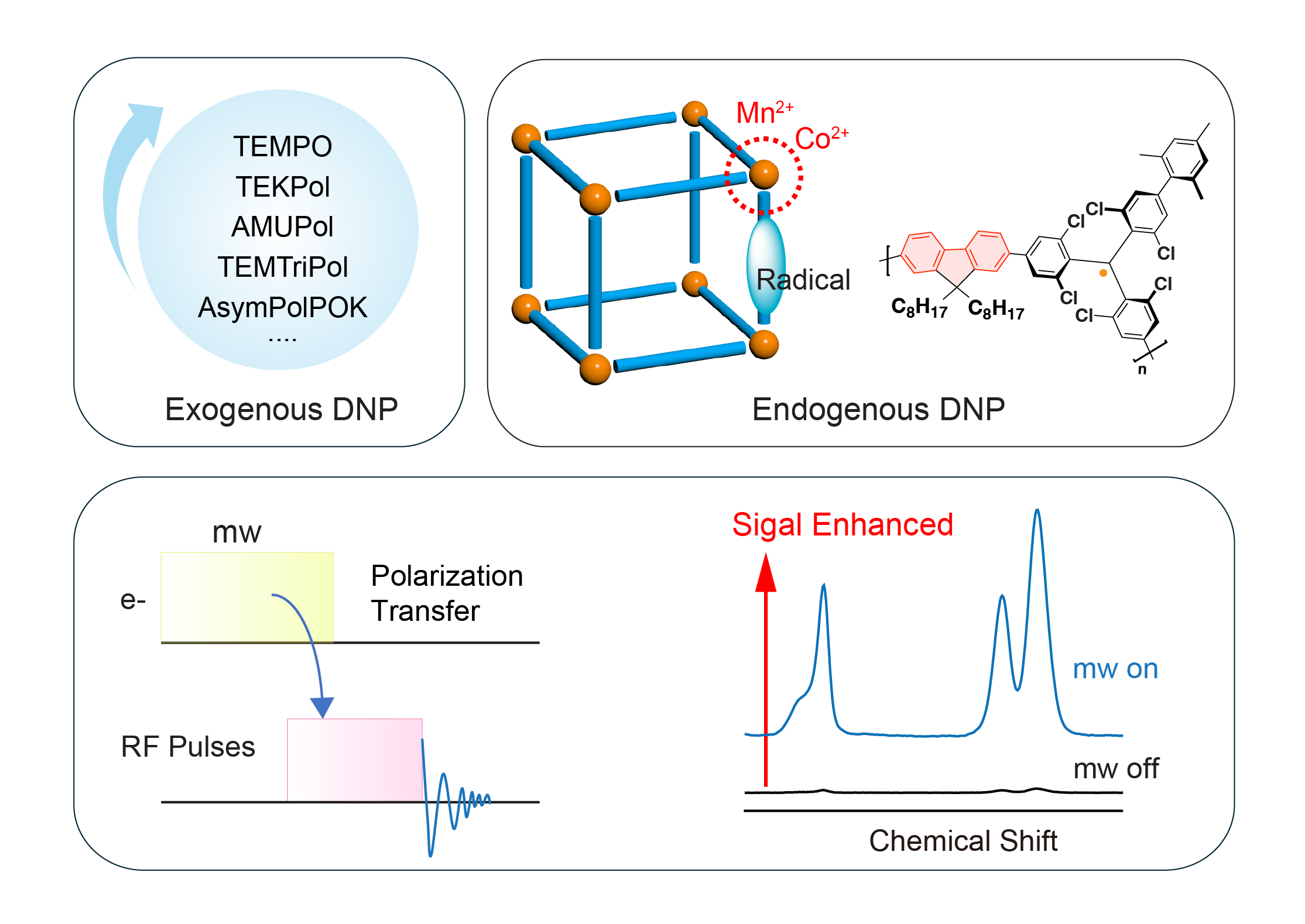
We develop advanced solid-state NMR methodologies and push the frontiers of DNP, with a particular emphasis on room-temperature DNP. Our work includes:

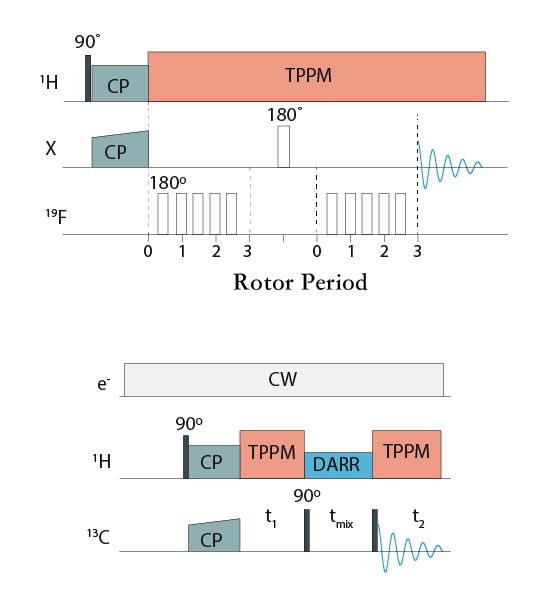
  • Design and implementation of advanced pulse sequences
  • Sensitivity enhancement via DNP across temperature regimes
  • Development of room-temperature DNP strategies for real materials
  • Integration of widely used and custom NMR sequences for complex systems

These efforts enable NMR to access previously inaccessible systems and significantly improve experimental efficiency.

Operando NMR of Optoelectronic Materials

We apply NMR to a wide range of optoelectronic materials, including:

  • Organic semiconductors and donor-acceptor systems
  • Co-crystals and charge-transfer materials
  • Conducting polymers and conductive MOFs
  • Perovskite materials

A central theme is operando and in situ spectroscopy, where we probe structural evolution under:

  • Light irradiation
  • Electrochemical charging
  • Variable temperature conditions

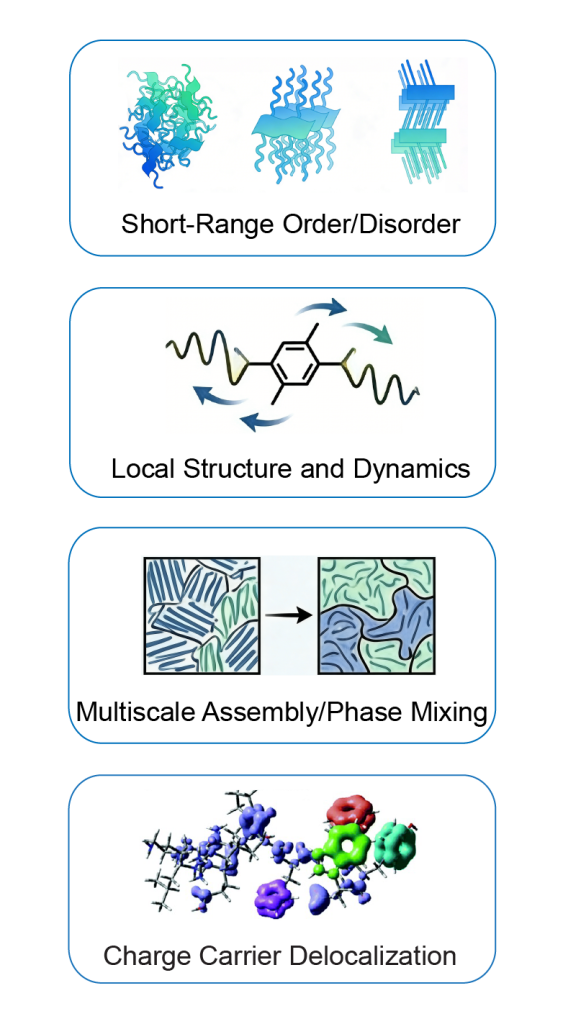
We focus on understanding structure-property relationships across multiple length scales, including:

  • Short-range order and disorder in amorphous systems
  • Local structure and dynamics
  • Multiscale assembly and intermixing
  • Charge carrier delocalization and electronic structure

DNP-Enhanced Structural Characterization

By combining low- and room-temperature DNP, we significantly enhance NMR sensitivity and extend its applicability to challenging systems. Our goals include:

  • High-sensitivity structural characterization of optoelectronic materials
  • Bridging conventional NMR and DNP-enhanced spectroscopy
  • Developing operando DNP methodologies under realistic conditions (light, bias, etc.)
  • Accessing dilute, disordered, or weakly interacting systems

This enables deeper structural insights beyond the limits of conventional NMR.

Computational NMR & Quantitative Analysis

Computational approaches are essential for interpreting NMR data and extracting quantitative insights.

We combine experiment and theory to:

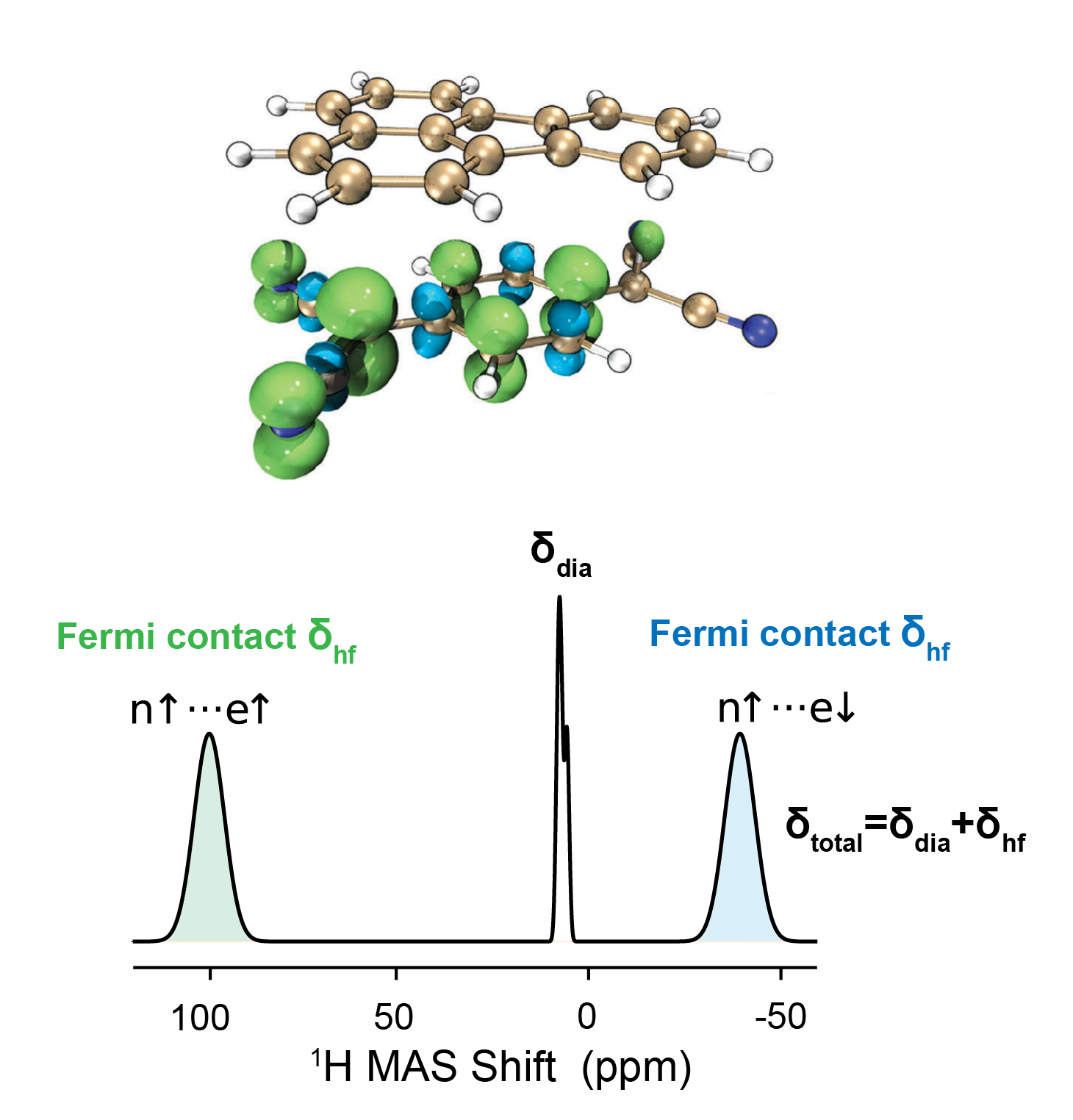
  • Calculate NMR parameters (chemical shifts, quadrupolar couplings CQ)
  • Analyze hyperfine interactions and electronic environments
  • Simulate NMR spectra (e.g., using SIMPSON)
  • Determine structural parameters such as internuclear distances

This integration enables a deeper understanding of structure-electronics relationships.